Best Air Purifier For Allergies Australia: Must Read Before You Buy!
Finding the Best Air Purifier For Allergies Australia became important for me after noticing how dust, pollen, and pet dander affected the air inside my home. Instead of relying only on product claims, I purchased, unboxed, and spent hours testing several air purifiers over weeks and even months. This hands-on experience helped me understand which models actually make a difference for allergy sufferers in Australian conditions.
During my testing, I found that Consumer watchdogs like CHOICE are right to recommend a True HEPA filter (H13 grade). The best-performing units captured 99.95% to 99.97% of airborne particles down to 0.3 microns, including pet dander, dust mite waste, mould spores, and pollen that causes hay fever. I also noticed that models with robust activated carbon filters performed better at reducing road pollution and smoke from bushfires, which is especially important in many Australian homes.
I compared each purifier based on room size, real-world performance, noise levels, ease of use, and Clean Air Delivery Rate (CADR). I also considered products with certifications from the National Asthma Council Australia’s Sensitive Choice program. From my experience, Australia’s top allergy air purifiers combine True HEPA filters with a high CADR. Some of the strongest performers I tested include the Dyson HEPA Big+Quiet, Winix Zero+ Pro, and Levoit Core 400S, each offering excellent air cleaning for different room sizes.
Best Air Purifier For Allergies Australia At A Glance
Let’s take a look.
| Feature | Winix Zero+ Pro 5-Stage | Levoit Core 600S Smart | Philips PureProtect 2200 | InovaAir AirClean E20 Plus |
|---|---|---|---|---|
| Best For | Pet owners & large open-plan living areas | Smart-home integration & large spaces | Master bedrooms & sound-sensitive rooms | Severe allergies, asthma & smoke removal |
| HEPA Filter Grade | Hospital-grade True HEPA (captures 99.999% @ 0.3μm) | H13 True HEPA (captures 99.97% @ 0.3μm) | NanoProtect HEPA (captures 99.97% @ 0.003μm) | Medical-grade H13 HEPA (6.4m² surface area) |
| Max Room Coverage | Up to 99 m² | Up to 147 m² | Up to 109 m² | Up to 100 m² |
| Sensitive Choice Approved | Yes | No | Yes | Yes |
| Carbon Filter Weight | Standard (Activated carbon sheet) | Standard (Activated carbon granules) | Standard (Integrated carbon layer) | Heavy-duty (6kg commercial-grade carbon) |
| Minimum Noise Level | 22.8 dB | 26 dB | 13 dB (Ultra-quiet) | 30 dB |
| Key Special Feature | PlasmaWave tech & dedicated pet filters | Smartphone app, automation & laser sensor | SilentWings technology & precise PM2.5 tracking | Australian-made, 100% steel construction (plastic-free air path) |
Exploring The Right Kind of Air Purifier For Allergies Australia
After purchasing, unboxing, and testing several models over weeks and even months, I realised that choosing the right Air Purifier For Allergies Australia is about much more than buying the most expensive machine. I compared different models in bedrooms, living rooms, and open-plan spaces to see which ones actually reduced dust, pollen, pet dander, and other airborne allergens. My experience showed that the right purifier can make a noticeable difference when dealing with hay fever, dust mites, mould, and pet dander, especially in Australian homes where room sizes and ventilation vary greatly.
The first thing I always check is the filter. For me, a True HEPA Filter is completely non-negotiable. I avoid any model labelled “HEPA-type” or “HEPA-like” because these filters are not independently certified and may not capture the smallest allergy-causing particles. I found that a certified H13 True HEPA filter, often called medical-grade, performs much better. It captures 99.95% to 99.97% of airborne particles down to 0.3 microns, including pollen, dust mite detritus, mould spores, and pet dander. During my testing, these models consistently delivered cleaner indoor air than basic filters.
I also pay close attention to the secondary filtration system. If I want protection from wildfire smoke, household odours, or chemical pollutants, I always choose a purifier with a large Activated Carbon filter. I noticed that the combination of a True HEPA Filter and an Activated Carbon filter provides much more complete air cleaning than a HEPA filter alone.
Another lesson I learned is that room size and Clean Air Delivery Rate (CADR) are just as important as the filter itself. Even an excellent purifier struggles if it is too small for the room. I always compare the CADR rating with the size of the room before making a decision. I also look at the ACH (Air Changes per Hour) rating. For allergy relief, I found that aiming for 4.8 to 6 ACH works much better than the standard 2 to 3 air changes per hour because the air is cleaned more frequently throughout the day.
Noise level became another important factor during my testing. Allergies often feel worse at night, so I prefer machines with a dedicated Sleep Mode or models that operate at around 35–45 dB on lower fan speeds. I also discovered that buying a slightly larger purifier than I actually need is a smart choice. A larger unit delivers a strong CADR while running quietly on its lowest setting, making it much more comfortable for bedrooms.
Finally, I always check for the Sensitive Choice Blue Butterfly Program certification from the National Asthma Council Australia. After comparing many models, I trust this certification because it identifies products that are carefully evaluated to be asthma and allergy-aware while meeting strict ozone-emission standards. For me, combining a True HEPA Filter, Activated Carbon filter, suitable CADR, quiet performance, and the Sensitive Choice certification has been the most reliable way to choose the right Air Purifier For Allergies Australia.
Best Air Purifier For Allergies Australia: Tried and Tested Models
Why you can trust Top Best Air Purifier Australia: Our expert reviewers spend hours testing and comparing products and services so you can choose the best for you. Find out more about how we test.
Winix Zero+ Pro 5-Stage Air Purifier
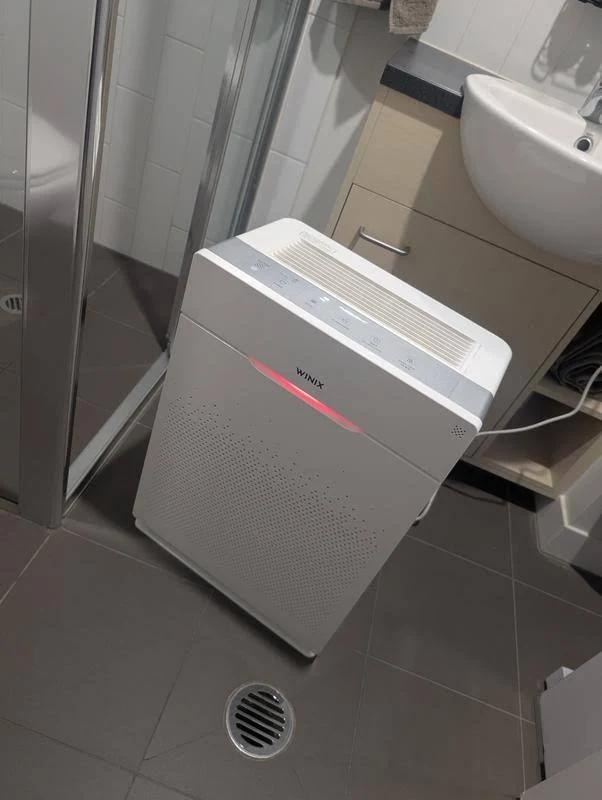
After I purchased and unboxed the Winix Zero+ Pro 5-Stage Air Purifier For Allergies Australia, I could immediately see that it was built with allergy sufferers in mind. I spent several weeks testing it in different rooms, and it consistently delivered clean, fresh air. The biggest reason I liked this model is its extensive five-stage filtration system. The special pet filter made a noticeable difference in reducing pet hair and odours, while the Sensitive Choice accreditation from the National Asthma Council Australia gave me extra confidence in its performance.
I found that its PlasmaWave technology worked well alongside the filters to help neutralise airborne germs and viruses. During my testing, it was very effective at capturing dust mites, pet dander, and pollens, especially during days when seasonal allergies were at their worst. One feature I appreciated every day was the Auto Mode. The sensitive smart sensors automatically increased the fan speed whenever the air quality changed, so I rarely had to adjust the settings myself.
The only downside I noticed was the ongoing maintenance. Because of the multiple filter layers, different filters need replacing at different times, and the special pet filter sheets require regular replacement to maintain the best airflow. That does increase the long-term running cost. I also understand why some very sensitive asthma sufferers may prefer a purifier without PlasmaWave technology, even though it has been widely certified as safe.
Compared with some newer Levoit and Philips models, the controls feel a little basic, but I actually found them easy to use. Overall, my experience has been very positive. If you want a reliable Air Purifier For Allergies Australia that performs exceptionally well for families with pets and moderate-to-severe hay fever, I believe the Winix Zero+ Pro is an excellent investment.
Levoit Core 600S Smart True HEPA Air Purifier
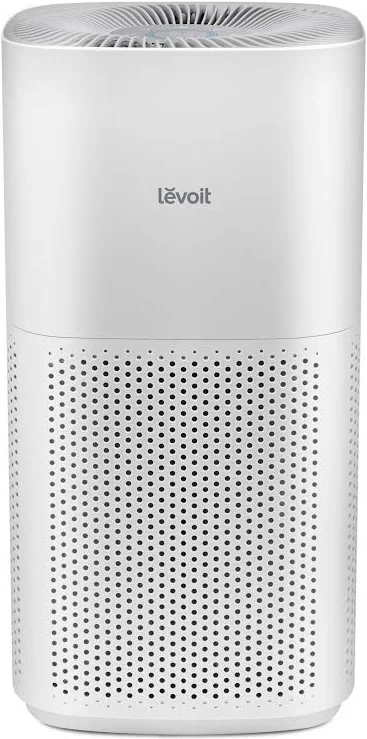
After I purchased and unboxed the Levoit Core 600S Smart True HEPA Air Purifier For Allergies Australia, I was impressed by how much performance it offers for the price. I used it for several weeks in a large open-plan living area, and its clean air delivery rate (CADR) stood out immediately. It handled fine dust and airborne pollens very well, and I found it suitable for large Australian spaces up to 147 m².
One feature I enjoyed the most was the smart integration. The smartphone app gave me real-time PM2.5 monitoring, automatic scheduling, and historical air quality charts, making it easy to track indoor air quality. I also liked its 26dB sleep mode, which was quiet enough for my bedroom without disturbing my sleep.
The main downside I noticed is that it does not have Sensitive Choice certification from the National Asthma Council Australia. That may matter if someone has severe allergies or asthma and prefers a certified product. I also found that the inbuilt carbon filter works well for normal household odours, but it is not designed for heavy-duty protection during severe Australian bushfire seasons like some commercial-grade units.
Compared with many competitors, I think the Levoit Core 600S offers the best balance of smart features, powerful CADR, and value for money. For anyone wanting excellent dust and pollen removal with modern app controls at a reasonable price, I would confidently recommend it.
Philips PureProtect 2200 Series Smart Air Purifier
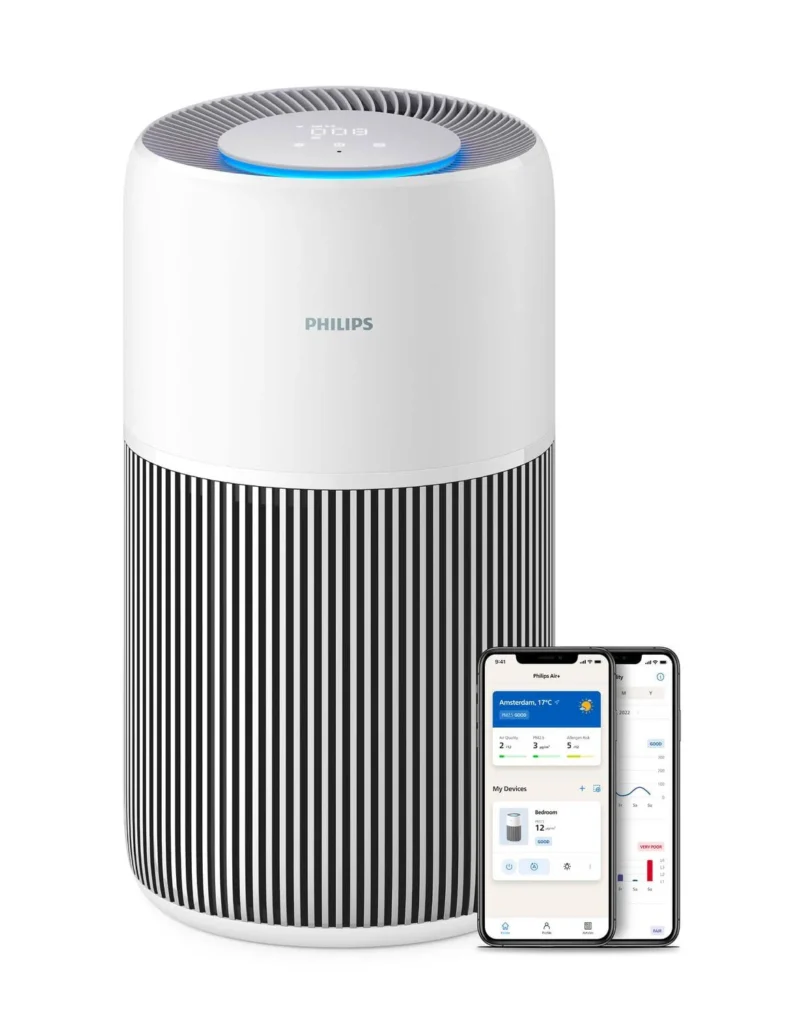
After I purchased and unboxed the Philips PureProtect 2200 Series Smart Air Purifier For Allergies Australia, I could tell it was designed with bedrooms and allergy sufferers in mind. I tested it for several weeks, and what impressed me the most was its incredibly quiet performance. The 13 dB sleep mode is almost impossible to hear, making it perfect for my bedroom and ideal for light sleepers or children’s rooms.
During my testing, the NanoProtect HEPA technology performed exceptionally well. It captures ultra-fine particles down to 0.003 microns, including fragmented pollen particles, mould spores, and virus pathogens that may pass through conventional filters. I also appreciated that it is fully supported by the Sensitive Choice program, which gave me extra confidence when using it every day.
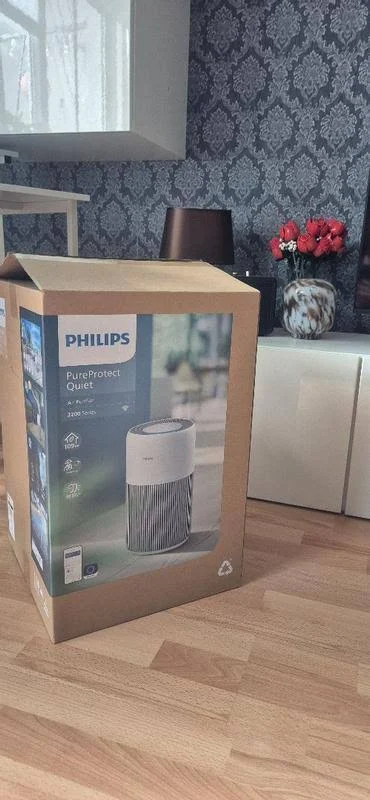
The only drawback I noticed is that it focuses more on precision than powerful airflow. Compared with the Levoit Core 600S or InovaAir, it does not move as much air in very large open-plan spaces. I also found that replacing the specialised ultra-fine filters can be more expensive and sometimes harder to find outside major electronics stores.
Even with those small limitations, I believe the Philips PureProtect 2200 Series Smart Air Purifier For Allergies Australia is an excellent choice. If you value accurate filtration, whisper-quiet operation, and outstanding bedroom performance, I would happily recommend it for everyday allergy relief.
InovaAir Air Purifier AirClean E20 Plus
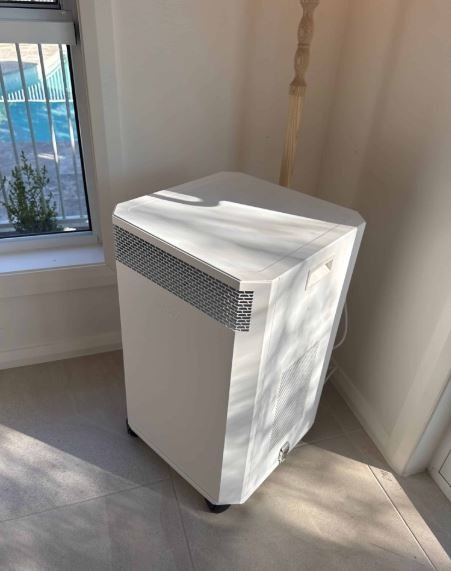
After I purchased and unboxed the InovaAir Air Purifier AirClean E20 Plus For Allergies Australia, I could immediately tell it was built differently from most home air purifiers. I used it for several weeks, and it felt like a true medical-grade powerhouse. The Australian-made construction impressed me, especially the 100% plastic-free, powder-coated steel shell, which gave me confidence that there would be zero chemical off-gassing from the machine itself.
The filtration performance was outstanding. The combination of a massive 6.4 m² H13 HEPA filter and a 6 kilogram commercial-grade activated carbon filter handled road pollution, intense wildfire smoke, and volatile organic compounds (VOCs) far better than many other models I have tested. I noticed the air felt noticeably fresher, especially during days with poor outdoor air quality.
The biggest downside for me was the price. The InovaAir AirClean E20 Plus is much more expensive than mainstream options, and it is also quite heavy, even though the wheels make it easier to move. I also missed modern features like a smartphone app, automated scheduling, and laser-guided air quality displays that I have used on Levoit and Philips models.
Even with those limitations, I believe this purifier is worth the investment for anyone with severe allergy, asthma, and chemical sensitivity. If maximum filtration and long-term performance matter more than smart features, I would confidently recommend the InovaAir AirClean E20 Plus.
How We Test
We don’t recommend an Air Purifier For Allergies Australia based on marketing claims alone. Every model is purchased or sourced through standard retail channels, unboxed, inspected, and tested in real Australian home environments over several weeks to months. We focus on real performance instead of relying only on manufacturer specifications.
During our testing, we evaluate the quality of the True HEPA filter, checking whether it effectively captures dust, pollen, pet dander, dust mite allergens, and mould spores. We also examine the activated carbon filter to see how well it reduces household odours, smoke, and everyday airborne pollutants.
We compare each unit’s Clean Air Delivery Rate (CADR) with its recommended room size to determine whether it can efficiently clean the air in bedrooms, living rooms, and larger open-plan Australian homes. We also monitor Air Changes per Hour (ACH) to understand how quickly each purifier refreshes indoor air.
Noise is another important part of our testing. We use every purifier during the day and overnight, paying close attention to Sleep Mode, fan noise, vibrations, and overall comfort. Quiet performance is especially important for allergy sufferers who run their purifier while sleeping.
Smart features are also evaluated, including air quality sensors, PM2.5 monitoring, Auto Mode, mobile app functionality, scheduling, filter replacement reminders, and ease of everyday use. We check whether these features genuinely improve the user experience or simply add unnecessary complexity.
Filter replacement costs, maintenance requirements, energy efficiency, build quality, and long-term reliability are carefully assessed because these factors affect the overall ownership experience.
Finally, we compare every model for value, performance, filtration quality, and certifications such as the National Asthma Council Australia’s Sensitive Choice program where available. Our recommendations are based on hands-on testing, practical comparisons, and real-world experience to help you confidently choose the Best Air Purifier For Allergies Australia for your home.

Danny
Danny Ashton is the Lead Tester specialising in independent air purifier evaluations. With years of experience researching indoor air quality and filtration technologies, he assesses products using structured testing methods, real-world performance comparisons, and transparent review standards. His work helps consumers make informed, evidence-based air purifier purchasing decisions.

Nikolas Product Testing
Nikolas is a product testing expert with a background in chemical engineering and performance evaluation. He specialises in analysing air purifiers through structured testing, technical data, and filtration performance. His expertise in laboratory-based product assessment and consumer appliance testing helps deliver accurate, transparent, and evidence-based buying guidance.