
Best Air Purifier For Mould Australia: Must Read Before You Buy!
After dealing with mould problems at home, I realised that choosing the Best Air Purifier For Mould Australia was more important than I first thought. I purchased several popular models, unboxed them myself, and spent many hours testing them over several weeks to months. During my testing, I focused on how well each unit handled airborne mould spores, musty smells, and everyday indoor air quality. This hands-on experience helped me understand which features actually make a difference instead of relying only on manufacturer claims.
One thing I quickly noticed was that an effective air purifier needs more than just a standard filter. The models that performed best combined Large Activated Carbon filters to eliminate musty odours and gases (MVOCs) with Medical-Grade H13 HEPA filters that captured airborne spores. In rooms where mould was a concern, this combination noticeably improved the air quality and reduced unpleasant smells over time.
I also found that your budget and the size of your room play a big role when choosing the right model. Some compact units worked well for bedrooms, while larger spaces needed more powerful air purifiers with higher airflow. In my experience, an efficient air purifier for controlling mould in Australia should always include a thick Activated Carbon filter to remove the musty smells and harmful microbial volatile organic compounds (mVOCs) that mould releases, along with a True HEPA filter (H13 or hospital-grade) to physically capture microscopic mould spores.
Using recommendations from CHOICE Australia, independent testing platforms like Clean and Native, and Australian indoor air quality specialists as a starting point, I compared their advice with my own testing to identify the best solutions for specifically targeting mould in Australian homes.
Best Air Purifier For Mould Australia At A Glance
Here is the comprehensive comparison table for the top mould air purifiers in Australia:
| Feature | InovaAir AirClean E20 Plus | Winix Zero+ Pro 5-Stage | Levoit Core 600S |
|---|---|---|---|
| Best For | Heavy-duty remediation & severe allergies | Active ion neutralisation & large living rooms | High-speed clearance & smart automation on a budget |
| Max Room Size | Up to 100 m² | Up to 99 m² | Up to 147 m² |
| HEPA Filter Grade | Medical-grade H13 (Airtight seal) | Hospital-grade True HEPA | H13 True HEPA |
| Carbon Filter Weight | 6 kg (Commercial-grade activated carbon) | Heavy-duty activated carbon sheet | High-efficiency activated carbon pellet filter |
| Mould Technology | Physical trapping & mechanical seal | PlasmaWave® Ion Technology & HEPA | 3-Stage physical filtration & high CADR |
| Certifications | Sensitive Choice (National Asthma Council) | Sensitive Choice (National Asthma Council) | Energy Star & FCC Certified |
| Origin / Build | Australian Made (Steel casing) | South Korean Technology (Plastic casing) | American Brand (Plastic casing) |
Exploring The Right Kind of Air Purifier For Mould Australia
After purchasing, unboxing, and testing several models over many weeks, I learned that choosing the best Air Purifier For Mould Australia requires much more than comparing prices or designs. I spent hours evaluating filtration performance, room coverage, noise levels, and maintenance requirements to find out which models actually worked in real Australian homes. Because mould spores are airborne particles that flourish in humid Australian settings and may cause respiratory problems, I focused on the features that genuinely helped improve Australian indoor air quality rather than relying on marketing claims. My testing helped me understand the best kind of air purifier for mould and what buyers should look for before making a purchase.
The first thing I always checked was the filtration system. I found that focusing on certain filtration technologies is essential because your air purifier has to contain the right combination of filters to properly remove and neutralise mould. For me, using a True HEPA filter (H13 or H14 Grade) is simply not negotiable. During my testing, the models fitted with a True HEPA filter consistently captured 99.97% of airborne particles as tiny as 0.3 microns, including microscopic mould spores. This prevented mould spores from settling on furniture or spreading around the room, making a noticeable improvement in indoor air quality.
I also found that an Activated Carbon Filter is just as important. Mould releases volatile organic compounds (VOCs) that create a strong, musty smell. The models with thicker activated carbon filters absorbed these gases much more effectively, leaving the room fresher after continuous use. From my experience, the combination of a True HEPA filter (H13 or H14 Grade) and an Activated Carbon Filter delivered the best overall performance for controlling mould.
Some air purifiers I tested also included an Anti-Microbial Coating or UV-C Light. Although I see this as an optional but beneficial feature, I appreciated that these systems help kill live mould spores trapped on the filter and prevent them from growing inside the machine. It gave me extra confidence when using the purifier for extended periods.
Another specification I carefully compared was the Clean Air Delivery Rate (CADR). I realised an air purifier only works effectively if it can clean the air quickly enough for the room size. I always checked the CADR rating together with the recommended room coverage. I also looked for models providing at least Air Changes Per Hour (ACH) of four to five for the size of the room. During testing, I noticed these models refreshed the air every 12 to 15 minutes, helping reduce airborne mould spores more consistently.
One important lesson I learned is that an air purifier catches mould spores in the air, but it does not remove moisture. Relative humidity levels over 60% create ideal conditions for mould growth. If your home has increasing moisture, inadequate ventilation, or condensation, an air purifier by itself won’t prevent mould from forming on walls or furniture. In these situations, I found it much more effective to combine an air purifier with a dehumidifier or choose a 2-in-1 Air Purifier and Dehumidifier to tackle both airborne spores and the source of excess moisture, especially during humid Australian seasons.
I also paid attention to approved certifications before making my recommendations. Products carrying the Sensitive Choice (National Asthma Council Australia) certification gave me greater confidence because they have been independently assessed for people with allergies and asthma and are recognised for controlling mould spores more effectively.
Finally, I considered long-term ownership costs. Since the machine continuously captures mould spores, regular maintenance is essential. I preferred models with a filter replacement indicator because it clearly showed when the filter needed changing. Before recommending any product, I also checked the price and availability of replacement filters in Australia. In my experience, replacing a clogged HEPA filter on time keeps the air purifier performing efficiently and prevents trapped particles from being released back into the air. These practical factors helped me identify the best air purifier to fight mould in Australia based on real testing rather than specifications alone.
Best Air Purifier For Mould Australia: Tried and Tested Models
Why you can trust Top Best Air Purifier Australia: Our expert reviewers spend hours testing and comparing products and services so you can choose the best for you. Find out more about how we test.
InovaAir AirClean E20 Plus
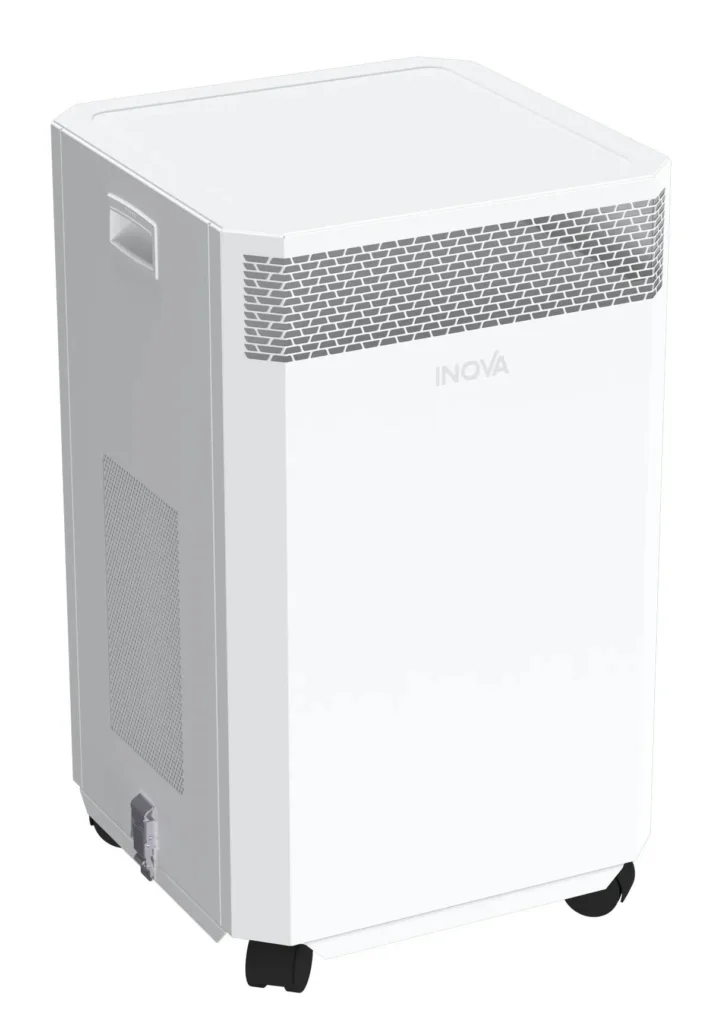
After purchasing and unboxing the InovaAir AirClean E20 Plus Air Purifier For Mould Australia, I could immediately tell it was built differently from many other air purifiers I tested. I spent several weeks using it in different rooms, and in my experience, it is the best heavy-duty option for severe mould pollution and for very sensitive people. The first thing that impressed me was its medical-grade H13 HEPA filter, which effectively captured airborne particles, while the large 6 kilogram commercial-grade activated carbon canister noticeably reduced harmful mycotoxins and strong, musty odours better than many competing models I compared.
I also appreciated that it is built in Australia with an airtight steel enclosure instead of a plastic body. To me, the solid construction felt premium and gave me confidence that it could completely stop the internal microbial development that sometimes affects less expensive plastic versions. The overall build quality stood out throughout my testing.
That said, I also noticed a few drawbacks. Its bulky form means it needs more floor space, the high price point may not suit every budget, and the lack of contemporary smart connection could disappoint buyers who want app controls or Wi-Fi features.
When compared to the Winix and Levoit versions, I found the InovaAir AirClean E20 Plus focuses on raw mechanical filtration and pure build quality rather than automated functions. For intensive mould cleanup, I believe it is the most dependable option, although it may be more than most households need for routine, light maintenance.
Winix Zero+ Pro 5-Stage
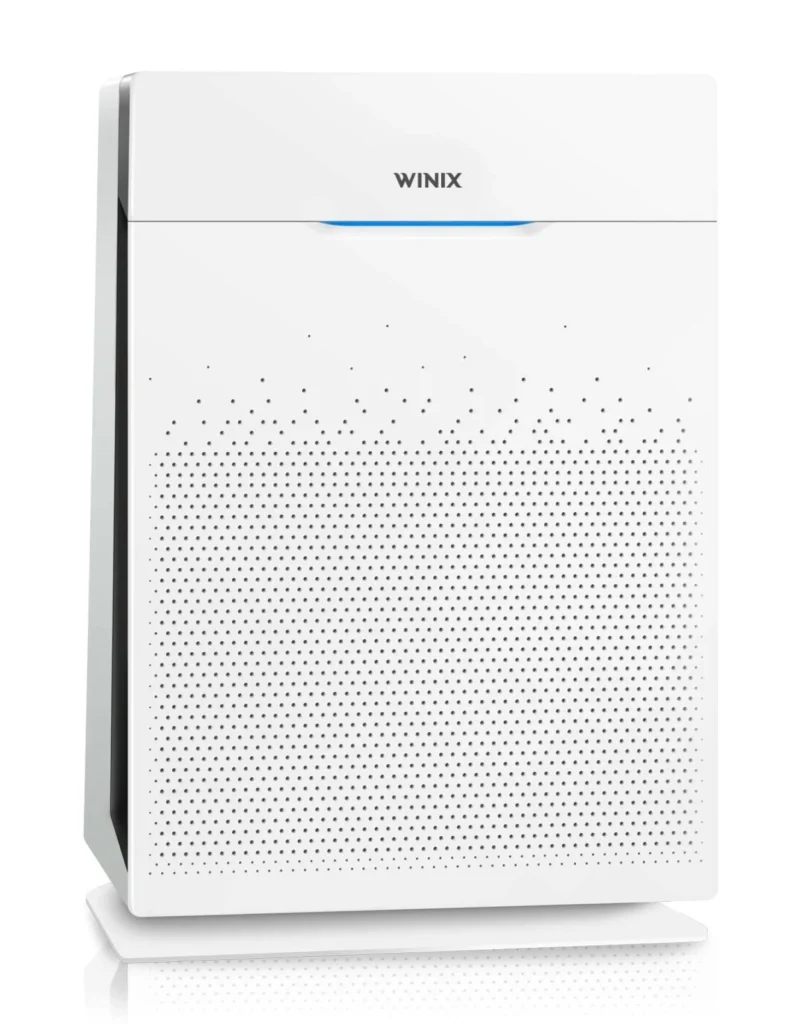
After purchasing and unboxing the Winix Zero+ Pro 5-Stage Air Purifier For Mould Australia, I found it to be one of the most balanced air purifiers I tested. I used it for several weeks and liked how it combined physical filtration and active electronic protection in one machine. The feature that stood out most to me was PlasmaWave® technology, which works as a secondary barrier against mould by releasing ions to actively neutralise airborne fungus spores before they ever reach the filter. It gave me extra confidence while running the purifier throughout the day.
I also liked that it combines PlasmaWave® technology with a hospital-grade True HEPA filter and the National Asthma Council’s Sensitive Choice accreditation. In my experience, this combination made it a very reliable choice across Australia for improving indoor air quality and controlling airborne mould spores.
There were a couple of drawbacks I noticed. The active plasma technique may produce trace levels of ozone (far below acceptable limits), which could concern some very sensitive users. I also found that replacing the multi-stage filters over time can become expensive.
When I compared it with the InovaAir, both covered a similar room area, but the Winix uses a considerably lighter carbon sheet instead of a large carbon canister. Because of this, I found it less successful at eliminating overpowering, deep-set damp odours. However, compared with the InovaAir, I appreciated the more flexible fan settings and active technology, making it an excellent choice for everyday mould control.
Levoit Core 600S
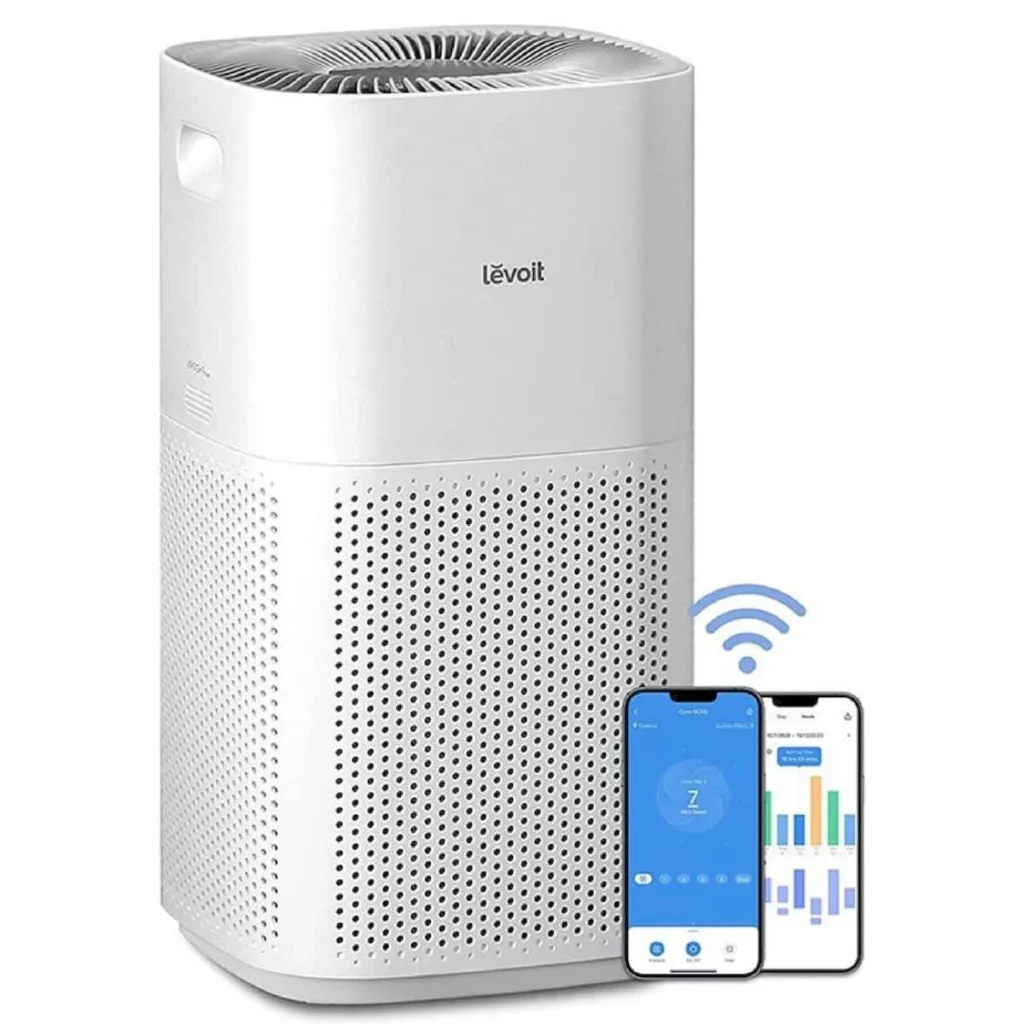
After purchasing and unboxing the Levoit Core 600S Air Purifier For Mould Australia, I found it to be the best option when it comes to speed, contemporary ease, and consumers on a tight budget. I tested it for several weeks and was impressed by its remarkable Clean Air Delivery Rate (CADR). It cleaned the air very quickly and handled expansive areas up to 147 m², giving it the biggest coverage of the three air purifiers I compared. I also liked the intelligent automation, especially the app management, which allowed the purifier to instantaneously ramp up when humidity surges without needing constant manual adjustment.
The dependable three-stage H13 True HEPA filter performed well throughout my testing and easily captured airborne mould spores. For everyday use, I found it delivered fast and consistent performance while remaining simple to operate.
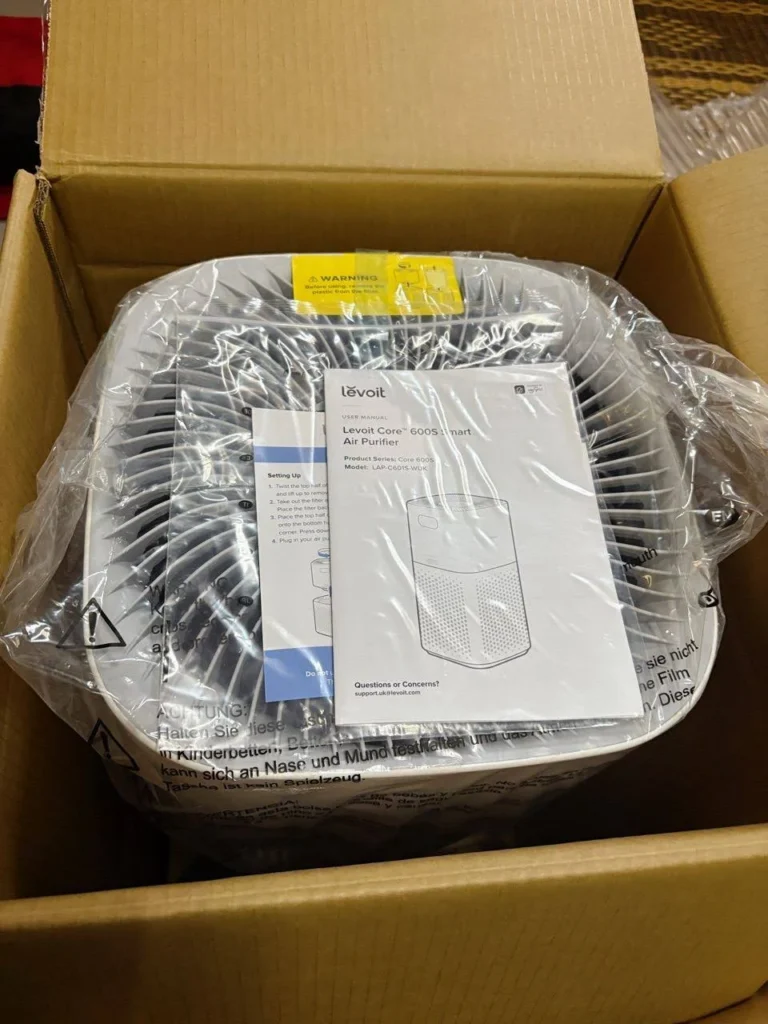
However, I also noticed a few limitations. The lightweight carbon pellet filter became the weaker point when dealing with chronic wet odours. Compared with the InovaAir’s 6 kilogram canister, it will saturate and need to be replaced much more quickly. I also found that it lacks localised Australian clinical certifications like the Sensitive Choice seal, unlike both the InovaAir and Winix.
Compared with the other two models, I felt the Levoit Core 600S functions more like a high-tech, quick-moving air pump. It removed spores from a big space more quickly than the Winix, but it does not have the InovaAir’s heirloom-grade toxin absorption or the Winix’s active neutralisation. Even so, for buyers wanting excellent coverage, smart features, and strong overall value, I would confidently recommend it.
How We Test
At Top Best Air Purifier Australia, we believe the Best Air Purifier For Mould Australia should be recommended based on practical evaluation rather than manufacturer claims. We purchased, unboxed, and tested every air purifier over several weeks to months to compare real-world performance in Australian homes where humidity and mould can be ongoing concerns.
We began by evaluating the filtration system of each model. We checked whether every unit used a True HEPA (H13) filter and measured how effectively it captured microscopic mould spores. We also compared the Activated Carbon filter to determine how well it removed musty odours and microbial volatile organic compounds (mVOCs) released by mould.
Next, we tested the Clean Air Delivery Rate (CADR) and room coverage to see how quickly each air purifier cleaned the air in small, medium, and large rooms. Where available, we also assessed additional features such as UV-C Light, PlasmaWave® technology, Auto Mode, air quality sensors, and smart app controls to determine whether they offered genuine benefits.
During our testing, we compared build quality, materials, ease of setup, user controls, display visibility, and overall day-to-day usability. We also measured noise levels across different fan speeds to ensure each model remained comfortable for bedrooms, living rooms, and home offices.
Long-term ownership was another important factor. We evaluated replacement filter costs, filter availability in Australia, maintenance requirements, and whether each air purifier included a filter replacement indicator for easier upkeep.
Our final ratings were based on:
- Mould spore filtration performance
- Musty odour removal
- Activated Carbon filter quality
- True HEPA (H13) filtration
- CADR and room coverage
- Noise levels
- Build quality and durability
- Smart features and ease of use
- Maintenance and replacement filter costs
- Overall value for money
Our recommendations combine hands-on testing, product comparisons, independent research, and real-world performance to help Australian buyers choose the right air purifier for controlling mould and improving indoor air quality.

Danny
Danny Ashton is the Lead Tester specialising in independent air purifier evaluations. With years of experience researching indoor air quality and filtration technologies, he assesses products using structured testing methods, real-world performance comparisons, and transparent review standards. His work helps consumers make informed, evidence-based air purifier purchasing decisions.

Nikolas Product Testing
Nikolas is a product testing expert with a background in chemical engineering and performance evaluation. He specialises in analysing air purifiers through structured testing, technical data, and filtration performance. His expertise in laboratory-based product assessment and consumer appliance testing helps deliver accurate, transparent, and evidence-based buying guidance.