Best Small Air Purifier Australia: Must Read Before You Buy!
I quickly realised that buying the Best Small Air Purifier Australia was not just about saving space. I wanted something compact that could still improve the air quality in my bedroom and home office without taking up much room. To find the right one, I purchased several popular models, unboxed each one myself, and spent many tired hours testing them over several weeks and even months. I compared their filtration performance, noise levels, ease of use, and overall value in everyday Australian conditions.
From my experience, choosing the right model depends on what you need most, whether it is for compact areas, smart features, price, or premium integration. I found that for smaller places like bedrooms, studies, or nurseries, it is worth choosing a unit that uses actual H13 HEPA filtration instead of lower-quality HEPA-type filters. The difference in filtration quality was noticeable during my testing.
I also compared products that consistently appeared in expert assessments and real-world performance testing. For tiny areas, bedrooms, or studios up to 30m², I found the Coway Airmega 150 and Levoit Core Mini to be among the strongest performers available in Australia. The Coway impressed me with its H13 HEPA filter and quiet 22 dB sleep mode, while the compact Levoit stood out for its economical, space-saving design that fit perfectly on my nightstand and workstation.
Best Small Air Purifier Australia At A Glance
Here is a quick, at-a-glance comparison of the top small air purifiers available in Australia to help you evaluate their features, coverage, and unique advantages:
| Model | Max Room Size (Approx.) | Filtration Type | Best For | Standout Feature |
|---|---|---|---|---|
| Levoit Core Mini (Must Buy) | Up to 14.4 m² | 3-Stage HEPA | Desks, bedside tables, and tight budgets | Integrated aromatherapy pad for essential oils |
| Coway Airmega 150 | Up to 20 m² | True HEPA (Green HEPA) | Rapid smoke & allergen clearance | Color-coded live air quality ring on the unit |
| Levoit Core 300S | Up to 21 m² | True H13 HEPA | Tech-savvy buyers & automation | Wi-Fi smart app controls and voice assistant compatibility |
| Philips PureProtect Mini 900 Series (Must Buy) | Up to 16 m² | NanoProtect HEPA | Severe allergy & asthma sufferers | Ultra-fine particle capture down to 0.003 microns |
| Dyson HushJet Purifier Compact | Up to 20 m² | Fully Sealed HEPA | Premium spaces & minimalists | Sleek, space-saving design with premium automated sensors |
Exploring The Right Kind of Small Air Purifier Australia
After purchasing and testing several models, I realised that choosing the right Small Air Purifier Australia is about much more than buying the smallest unit available. I compared different compact air purifiers in my bedroom, study, and home office over several weeks to see how they performed in everyday Australian conditions. From my experience, the best model balances filter efficiency, room measurements, and ongoing maintenance expenses. A compact purifier works well in smaller spaces, but an inefficient model can leave the air feeling unchanged while producing unnecessary background noise.
The first thing I always check is the filtration system. I now give True HEPA filtration the highest priority because it made the biggest difference during my testing. I looked for models that clearly stated they used a True HEPA filter, preferably H13 or H14 (true HEPA). These filters are designed to capture 99.97% of ultra-fine airborne particles, including mould spores, dust mites, pollen, and pet dander, down to 0.3 microns. I noticed that models with genuine H13 HEPA filtration gave me much more confidence than those using basic HEPA-type filters.
I also paid close attention to the Activated Carbon layer. If you want to reduce pet odours, cooking aromas, or volatile organic compounds (VOCs) from new furniture or household products, an activated carbon filter is worth having. During my comparison, I found that affordable micro purifiers often use thin carbon-coated sheets that become saturated quickly. Premium models with heavier carbon pellets generally lasted longer and controlled odours more effectively.
Another thing I avoided was experimental technology. I stayed away from uncertified ionisers and ozone generators because organisations such as CHOICE and medical institutions recommend avoiding products that may release respiratory irritants. I preferred simple and proven filtration that focused on clean air rather than unnecessary features.
I also learned that it is important to match the CADR to your room size instead of relying only on the manufacturer’s room coverage claim. I compared the CADR (Clean Air Delivery Rate), measured in cubic metres per hour (m³/h), before making my decision. For a space under 20m², such as a typical bedroom or study, I found that a compact purifier with a CADR of around 150 to 200 m³/h performed well. I actually preferred buying a slightly larger unit because I could run it on the lowest, quietest fan speed while still maintaining good air circulation throughout the room.
Noise levels became another important factor during my testing. Since these small purifiers usually sit beside the bed or on a workstation, I looked for models with a dedicated Sleep Mode or night setting that reduced operating noise to around 25–30 dB. I also checked user ratings on retail platforms because they often revealed whether a purifier developed annoying high-pitched motor whines at lower fan speeds.
Finally, I always considered the true cost of ownership before recommending any model. A low purchase price does not always mean better value. I checked the cost of filter replacement because most small purifiers require new filters every six to twelve months. I also preferred units with a vacuumable or washable pre-filter. Cleaning the pre-filter regularly helped extend the life of the more expensive internal HEPA filter, making the purifier more economical to own over time.
Best Small Air Purifier Australia: Tried and Tested Models
Why you can trust Top Best Air Purifier Australia: Our expert reviewers spend hours testing and comparing products and services so you can choose the best for you. Find out more about how we test.
Levoit Core Mini Air Purifier
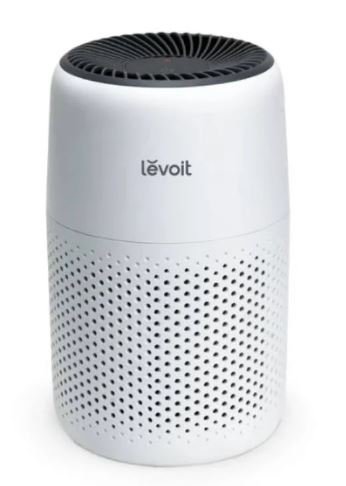
I purchased and unboxed the Levoit Core Mini Air Purifier because I wanted a reliable Small Air Purifier Australia for my desk and bedroom. After using it for several weeks, I found that it really shines when it comes to sheer price, its whisper-quiet 25dB night mode, and its exceptionally compact desktop footprint. It hardly takes up any space, so I could easily place it on my bedside table or workstation without making the area feel crowded.
One feature I genuinely enjoyed was the special aromatherapy pad. I added a few drops of my favourite essential oils, and it gave the room a fresh scent. It is a brilliant extra feature that none of the other competitors on our list provide, making it stand out from many compact models.
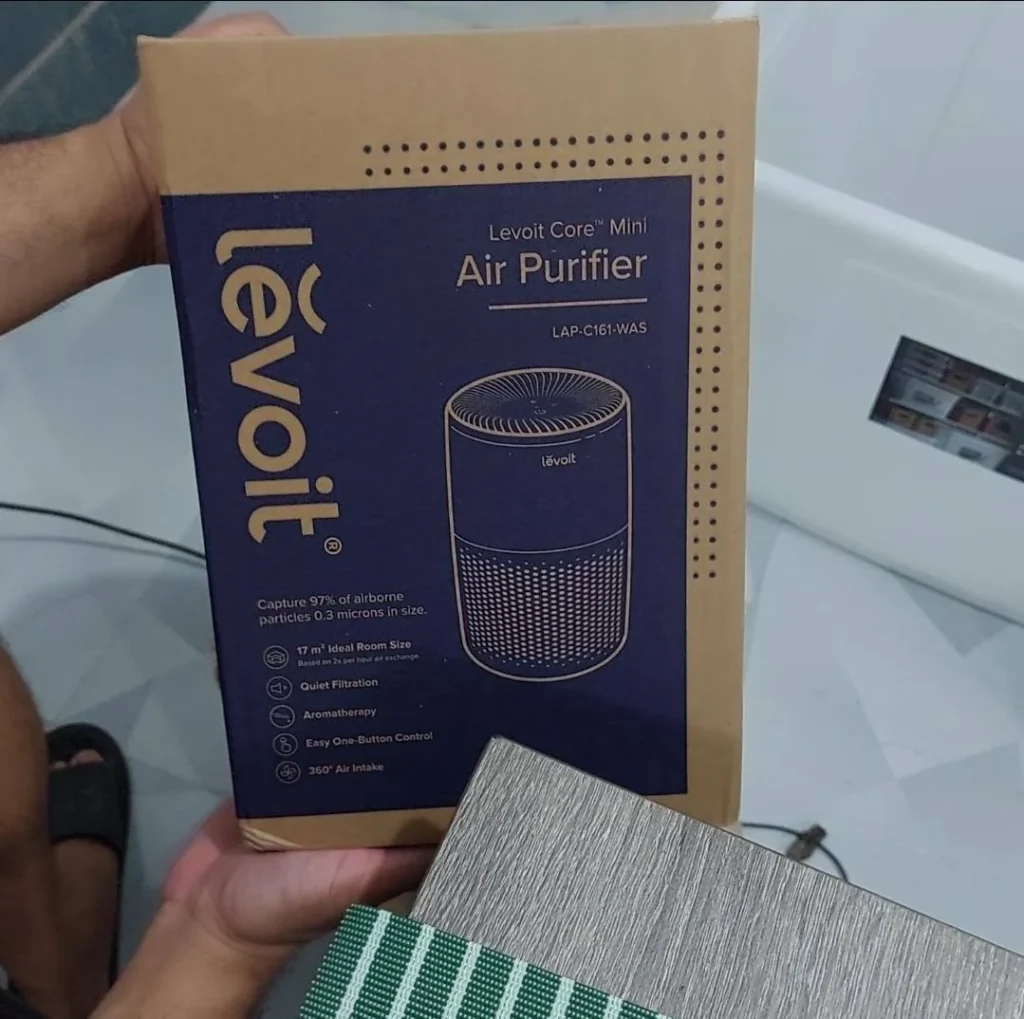
The only downside I noticed was its highly limited airflow and coverage, as it is designed for rooms only up to 14.4 m². When I compared it with the Philips PureProtect Mini 900 Series and the Coway Airmega 150, the Core Mini took noticeably longer to clean a room filled with strong smells or thick airborne particles. Its fan simply lacks the strength of its slightly bigger competitors. Even so, for anyone wanting an affordable, quiet, and compact Small Air Purifier Australia, I believe it is an excellent purchase for smaller personal spaces.
Coway Airmega 150
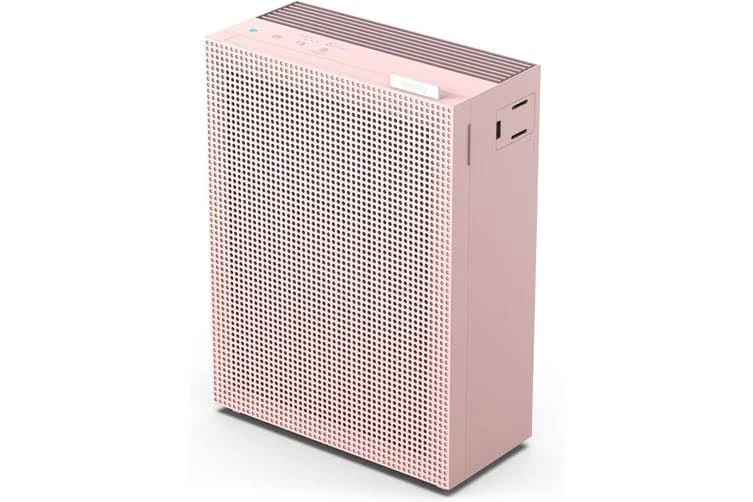
I purchased and unboxed the Coway Airmega 150 because I wanted a dependable Small Air Purifier Australia that could deliver strong air-cleaning performance in my bedroom and home office. After using it for several weeks, I understood why it is generally acknowledged by indoor air professionals. What impressed me most was its speedy air-cleaning capabilities. I noticed the air felt fresher much faster than with some other compact models I tested.
One feature I really appreciated was the very intuitive, color-coded ambient light ring. It let me check my real-time air quality at a glance, which made daily use simple without needing extra settings. I was also impressed by its unique Green HEPA filtration. It performed especially well at removing tenacious smoking odours and high seasonal pollen in medium-small rooms up to 20 m², making it an excellent choice for allergy sufferers.
The only drawback I found was that it absolutely lacks Wi-Fi connection or smartphone controls. I could not schedule it or switch it on remotely, which some users may miss. When I compared it with the Levoit Core 300S, the Levoit clearly outperformed the Coway for smart home automation, offering complete smartphone and voice-assistant connectivity for nearly the same physical footprint. Even so, if powerful filtration matters more than smart features, I would confidently recommend the Coway Airmega 150.
Levoit Core 300S Air Purifier
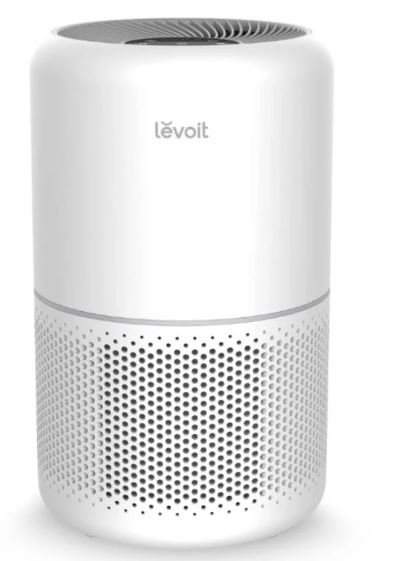
I purchased and unboxed the Levoit Core 300S Air Purifier because I wanted a Small Air Purifier Australia with modern features at a reasonable price. After using it for several weeks, I can see why many people consider it the best all-arounder for anybody looking for cutting-edge features without a high price tag. It delivered strong performance while giving me much more control than many other compact air purifiers I tested.
The feature I enjoyed the most was the VeSync app connection. I could monitor air quality history, create automatic routines, and connect it to Google Home and Amazon Alexa without any difficulty. I also liked that it uses an H13 HEPA filter with certified medical-grade filtration. In my experience, it performed far better than its weight class, especially considering its compact size.
The only weakness I noticed was that the automated laser sensor could sometimes be very sensitive or take a long time to calibrate. It did not affect the overall performance, but I occasionally found myself waiting for the readings to settle. Compared with the analogue Coway Airmega 150, the Levoit clearly offers many more smart features. However, it has a slightly more utilitarian, industrial appearance, so it may not suit a stylish bedroom as well as the Dyson or Philips models. Even so, I believe it is an excellent buy for anyone wanting performance, smart controls, and great value.
Philips PureProtect Mini 900 Series
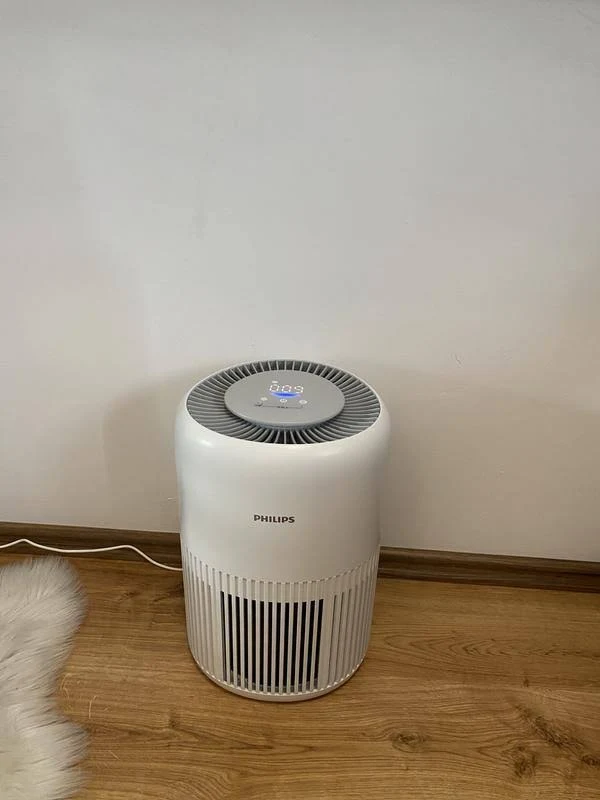
I purchased and unboxed the Philips PureProtect Mini 900 Series because I wanted to compare another Small Air Purifier Australia with the other compact models I had been testing. After using it for several weeks, I was most impressed by its exceptional medical-grade filtering efficiency. The biggest reason it stood out to me was its NanoProtect HEPA technology, which collects miniscule irritants down to an astounding 0.003 microns. Compared to the typical 0.3 microns that the Levoit Core Mini targets, I felt this purifier offered an extra level of confidence for cleaner indoor air.
For me, it is an excellent choice for anyone with severe asthma or those who are very sensitive to ultra-fine mould spores. It ran quietly, fitted nicely beside my bed, and delivered consistent performance in my small room.
The only downside I found was the recurrent expense. In Australia, Philips replacement filters are generally more expensive than Levoit’s more affordable alternatives, so the long-term running cost is higher. I also noticed it covers a little lower maximum area than the Coway Airmega 150, making it primarily a bedside or tight-space device. Even so, when it comes to handling tiny particles, I found it performs better than the Levoit Core Mini. If filtration quality is your highest priority, I believe it is a worthwhile investment.
Dyson HushJet Purifier Compact
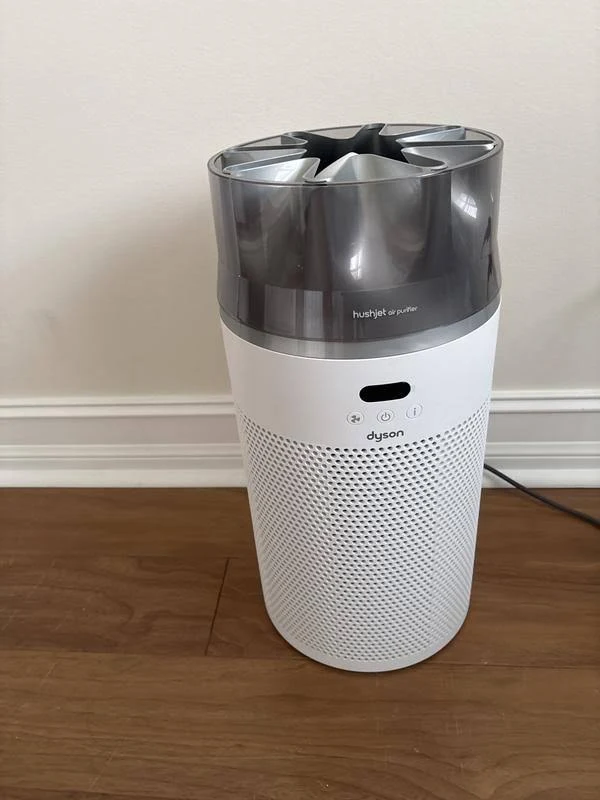
I purchased and unboxed the Dyson HushJet Purifier Compact because I wanted to experience a premium Small Air Purifier Australia and compare it with other compact models I had already tested. After using it for several weeks, I immediately noticed its high-end design, clever sensing, and completely sealed unit. I liked knowing that no contaminated air gets past the filter, which gave me extra confidence in its filtration performance.
What impressed me most was how well it blended into my room. It truly is the epitome of high-end design, fitting perfectly with an upscale minimalist design. I also found that it used cutting-edge innovation to uniformly and silently convey clean air over a 20 m² space. The air felt consistently fresh, and the purifier remained very quiet during everyday use.
The biggest downside for me was its price, which is many times greater than that of any other tiny purifier on our list. When I compared it with the Levoit and Coway models, they delivered comparable particle clearance speeds for a fraction of the investment. The Dyson certainly offers a more luxurious build, more accurate automated sensor adjustments, and a sleeker appearance than the Levoit Core 300S, but budget-conscious consumers may find the significant price increase difficult to justify. Even so, if premium quality matters most, I believe it is an outstanding choice.
How We Test
We do not recommend a Small Air Purifier Australia based only on product specifications or manufacturer claims. We purchase, unbox, and use every air purifier ourselves to understand how it performs in real Australian homes. Our testing takes several weeks and, in some cases, several months before we make any recommendation.
We compare each model in bedrooms, studies, and home offices to see how well it improves indoor air quality in smaller spaces. During our testing, we evaluate True HEPA filtration, H13 HEPA performance, Activated Carbon filtration, CADR (Clean Air Delivery Rate), room coverage, noise levels, airflow, and ease of maintenance.
We also test how effectively each purifier removes dust, pollen, pet dander, smoke odours, cooking smells, and other airborne particles. Sleep Mode, energy consumption, filter replacement costs, smart features, app connectivity, and overall build quality are all carefully assessed during everyday use.
Instead of relying only on laboratory data, we compare every model side by side under the same conditions. We note both the strengths and weaknesses of each product, including filtration efficiency, operating noise, design, long-term running costs, and value for money.
Our final recommendations are based on real hands-on experience, long-term testing, product comparisons, verified specifications, customer feedback, and expert research. This testing process helps us confidently recommend the Best Small Air Purifier Australia for different budgets, room sizes, and individual needs, so you can make an informed buying decision with confidence.

Danny
Danny Ashton is the Lead Tester specialising in independent air purifier evaluations. With years of experience researching indoor air quality and filtration technologies, he assesses products using structured testing methods, real-world performance comparisons, and transparent review standards. His work helps consumers make informed, evidence-based air purifier purchasing decisions.

Nikolas Product Testing
Nikolas is a product testing expert with a background in chemical engineering and performance evaluation. He specialises in analysing air purifiers through structured testing, technical data, and filtration performance. His expertise in laboratory-based product assessment and consumer appliance testing helps deliver accurate, transparent, and evidence-based buying guidance.